LYTES ZERO-SUGAR LIMITED FLAVORS


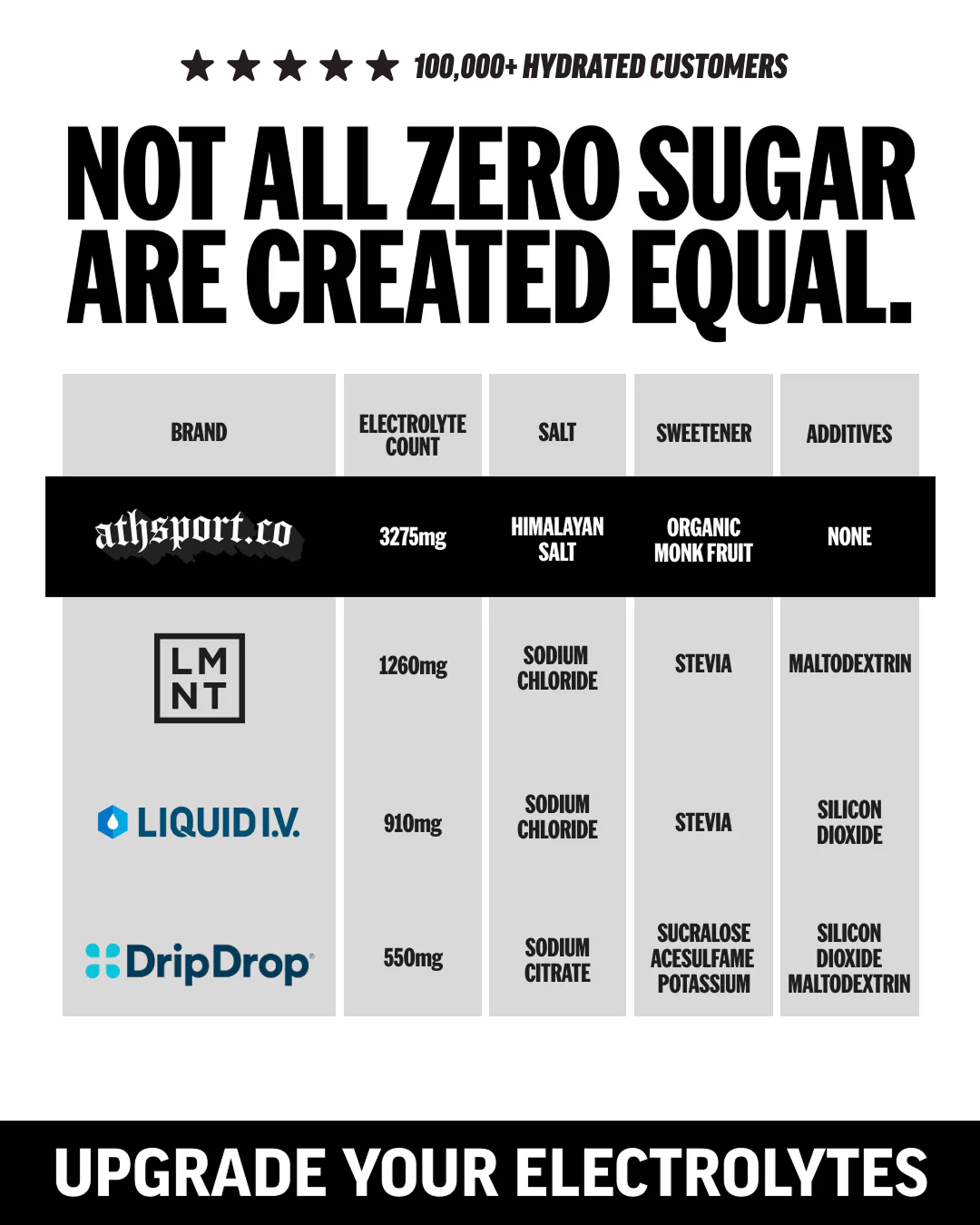


Mineral salt replenishes sodium lost through sweat and naturally provides trace minerals including magnesium, potassium, calcium, and iron. Minimally processed and never heated, refined, or blended with additives, our mineral salt retains its naturally occurring mineral profile in its purest form.

Potassium is an essential electrolyte that supports nerve signaling and helps regulate muscle contractions, reflexes, and heartbeat. Because the body cannot produce potassium, it must be replenished through diet to support healthy muscles, heart function, and overall hydration.

Magnesium is an essential electrolyte that supports muscle function, energy production, nerve signaling, and recovery. LYTES uses highly bioavailable Magnesium Glycinate, a chelated form that is efficiently absorbed and utilized by the body compared with many lower-quality forms of magnesium.

Chloride is an essential electrolyte that helps maintain proper fluid balance, blood volume, and hydration throughout the body. It also plays a critical role in normal cell function, helping your body maintain the right balance of fluids inside and outside your cells.

Our natural flavors begin with fruit oils, such as lemon or orange, which are spray dried into a powder using acacia gum as the carrier. Unlike cheaper carriers such as maltodextrin, dextrose, or modified food starch, acacia gum is minimally processed, plant-derived, and requires no chemical additives.

Lightly sweetened with 100% organic monk fruit. Unlike store-bought organic monk fruit, our monk fruit contains zero erythritol and zero Stevia.
Short answer: It's free of additives and contains trace minerals - which makes it a superior choice to table salt.
Pink Himalayan salt, mined from ancient sea salt deposits in the Himalayan mountains, is minimally processed to retain its natural state.
Unlike heavily refined table salt, it contains no additives, anti-caking agents, or harsh chemicals.
On top of that, it's rich in over 80 trace minerals including iron, magnesium, potassium, and calcium. Though these quantities are small, they help to support hydration and electrolyte balance.
Pink Himalayan salt and sodium chloride are not the same, read the next faq for an in-depth breakdown.
Although they both consist of sodium chloride, they aren't the same.
The terms table salt and sodium chloride are often used interchangeably.
However, sodium chloride and pink Himalayan salt are not.
Here's why:
Table salt is manufactured by extracting sodium chloride from underground salt mines or seawater, followed by a refining process to remove impurities and trace minerals. Chemicals like sulfuric acid or chlorine may be used for bleaching and sterilization, and anti-caking agents such as sodium ferrocyanide, calcium silicate, or magnesium carbonate are added to prevent clumping. This extensive processing strips most natural minerals present in unprocessed salts like pink Himalayan salt.
Pink Himalayan salt is mined from ancient salt deposits formed millions of years ago from evaporated prehistoric oceans. The process is minimal and largely manual, without chemical treatments or bleaching agents, preserving its natural state and trace mineral content. The salt's pink hue comes from iron oxide.
Takeaways: Table salt (sodium chloride) is heavily treated. Pink Himalayan salt is minimally processed and in its most natural state, which is why we use it.
Our Pink Himalayan salt is sourced from the Salt Range, stretching from Jalalpur to Mianwali within the Himalayan Mountain Range, and is mined using the traditional Pillar and Dome method, a standard for all commercially exported Himalayan salt.
This method involves creating cross-cut openings perpendicular to mining rooms, leaving salt pillars to support the overlying structure.
Like all Himalayan salt harvesting, the process begins with an initial explosive blast to open the mine, followed by manual extraction using axes, with the salt then carried out, crushed, rinsed, and screened.
At our supplier's Washington State facility, the salt undergoes rigorous quality control, including third-party laboratory testing for minerals and microbes, confirming no residual explosive materials.
Yes, our Pink Himalayan salt is 3rd party tested for Arsenic, Cadmium, Copper, Chromium, Lead, and Mercury.
At our supplier's facility in Washington State, the salt is subject to stringent quality control, with third-party lab testing for minerals and microbial content, ensuring no traces of explosive residues remain.
Our flavors begin with fruit oils that undergo a spray-drying process.
Spray-dried fruit flavors are created by atomizing fruit oils into a fine mist and drying it with hot air to produce a concentrated powder that retains the fruit's natural essence.
To ensure stability, shelf-life, and usability, a carrier is added during the spray-drying process. In manufacturing, converting liquids into powders will always require a carrier ingredient, however they're not all the same.
Our carrier of choice is acacia gum as it requires minimal processing and no additives, making it the cleanest and most natural choice. Other common and cheaper alternatives include maltodextrin, modified food starch, and dextrose, which are known to be highly processed with additives involved.
No, LYTES does not have maltodextrin in its formula.
Maltodextrin is typically used as a flavor carrier due to its low cost, however maltodextrin is a carbohydrate that can spike blood sugar and cause digestive issues in certain individuals which makes it less than ideal.
In reality, all flavors need a carrier to turn them from liquid extracts to dry powders. Examples of these carriers include maltodextrin, modified food starch, dextrose, or acacia gum.
We use acacia gum because it's minimally processed with zero additives and the cleanest, most natural option available. Acacia gum is derived from acacia trees, specifically the stems and branches of Acacia Senegal or Acacia Seyal trees. There are no chemicals used to manufacture acacia gum.
We've selected Magnesium Glycinate for its fully chelated Magnesium, enhanced by the amino acid Glycine.
Glycine's advantages extend beyond just improving sleep (without causing drowsiness, it promotes better rest). As a key amino acid, Glycine supports glutathione production, a potent antioxidant, and aids in the production of creatine whose benefits are well-known.
Additionally, our formula includes malic acid, covering any advantages Magnesium Malate might offer.
Our citric acid comes from cassava root, a superior alternative to conventional citric acid.
Unlike typical citric acid sourced from corn or sugar beets, which are often GMO and processed with synthetic chemicals, cassava-derived citric acid is non-GMO and gluten free.
Mix one stick pack with 8-12 ounces of water for best flavor.
Use LYTES to rehydrate and replenish electrolytes lost through training and everyday functions.
We recommend a maximum of 3-4 sticks per day.
Used LMNT for years and these have way better ingredients, plus you don’t burn your nose when you open the packet due to citric acid like the other!
Best balanced, quality ingredients and tasting electrolytes I've used. I stir in one packet in a 20oz insulated tumbler and it dissolves so easily. I follow my macro nutrition daily and this product makes me feel better. Thank you for the great customer service.
I have been using it for about a week and so for I'm pleased with the results.
Clean ingredients & tasty! We take these daily for extra hydration as well as for the benefits of the magnesium within the electrolytes powder. Bonus: Doesn’t cause me to bloat or digestion issues.
Best hydration supplements i have tried yet.
No more cramps at night more energy throughout the day.
Ive tried many different brand's of electrolytes and have finally settled on this brand. Good tasting, no sugar and keeps me hydrated on long day exercising out in the mountains. Thanks ATH
I bought 5 flavors and they all taste great! Especially the tropical flavors.
I am an electrolyte addict and tried these after learning my current electrolyte brand had a very low score on the Yuka app. A functional medicine dietician I follow recommended these .
Best electrolyte powder I've tried as far as really good hydration, but because I'm sensitive to any kind of sweetener, even monk fruit, I only use 1/2 pack at a time. Grateful for minimal ingredients, as well as no stevia.
There is no comparison between this product and body armor/liquid iv/gatorlyte/ etc. This was the only product that helped me stop cramping while playing college football. It ACTUALLY has a suitable amount of salt your body needs while sweating.
