

The Kettlebell Goblet Squat: Techniques, Benefits, and Variations
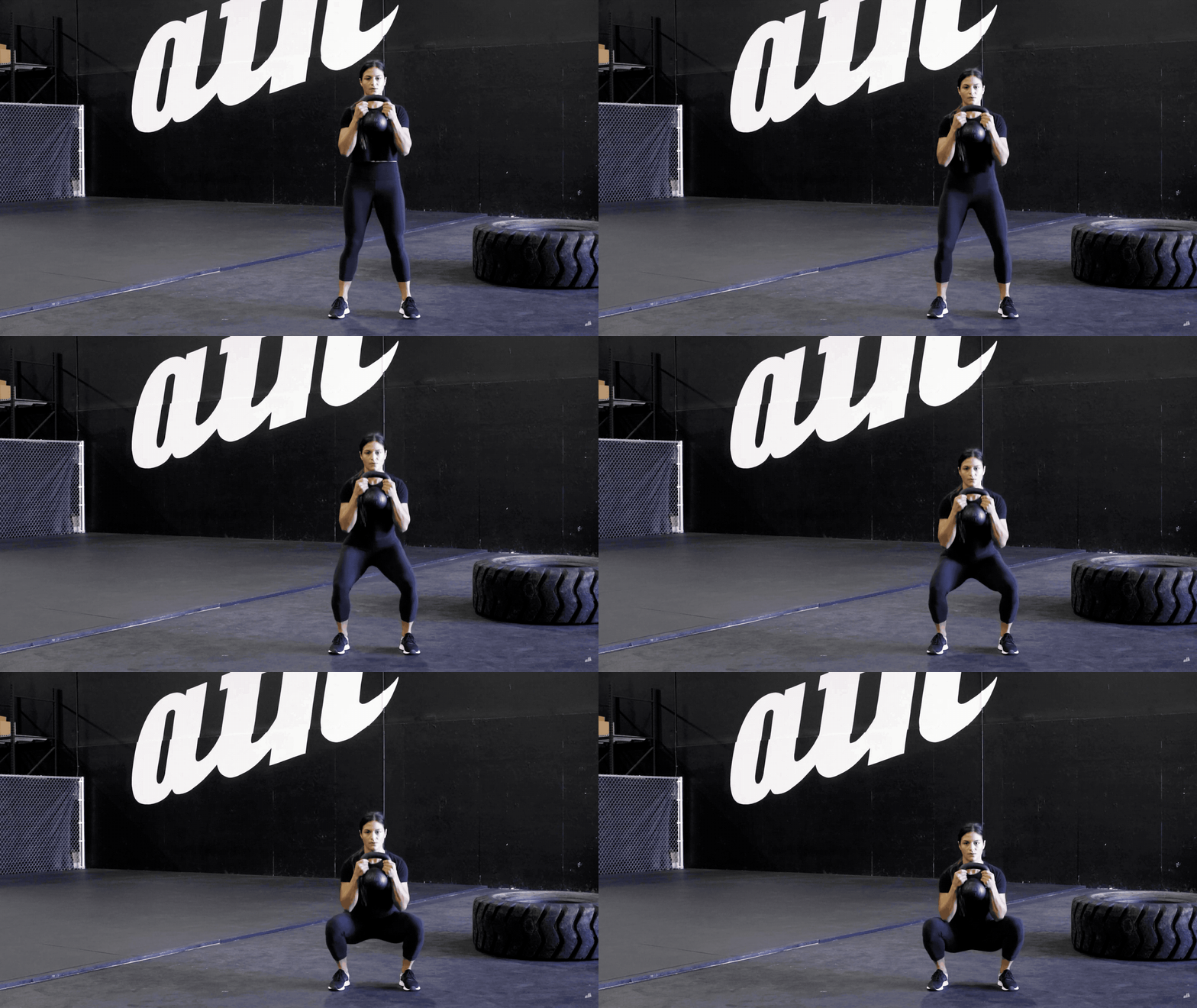
The kettlebell goblet squat is a compound movement that activates most of the muscles in the body, while specifically targeting the quads, hips, glutes, upper back, and core muscles.
KEY TAKEAWAYS
- The kettlebell goblet squat is a foundational movement of kettlebell training that loads the weight at the front of your body.
- The kettlebell goblet squat requires strength and mobility of the hips, knees, and ankles.
- There are many variations of the kettlebell goblet squat that can be utilized to target different muscles groups, add resistance, and add variety.
KETTLEBELL GOBLET SQUAT TARGET MUSCLES
The kettlebell goblet squat is a compound movement that works the full body, however, it puts emphasis on the following muscle groups:
- Glutes
- Quads
- Hamstrings
- Hips
- Scapular Stabilizers
- Core
HOW TO PERFORM THE KETTLEBELL GOBLET SQUAT
THE RIGHT WEIGHT
Choosing the right weighted kettlebell depends on your strength, mobility, and rep ranges; but here are a few tips.
If you're a beginner, choose a lightweight kettlebell to practice your form and technique.
If you're familiar with kettlebells, choose a medium to heavyweight bell that fits your rep ranges.
Keep these ranges in mind when choosing your bell.
- 1-6 Strength Reps: Heavy
- 8-12 Hypertrophy Reps: Medium-Heavy
- 15-20 Endurance Reps: Medium
THE STARTING POSITION
The goblet squat position requires depth and mobility, so naturally, you'll be using a wider stance compared to the typical "shoulder width apart" stance.
- Stand with your feet slightly wider than hip-width apart.
- The kettlebell should be placed directly under you and centered between your feet.
The goblet squat's wide stance allows you to maintain balance while lowering your body into the deep squat position while helping you stabilize the kettlebell in front of your body to minimize the risk of injury.
The width of your stance will depend on your strength and the mobility of your hips, knees, and ankles.
- A wide stance targets the inner thighs, quat, and glute muscles while improving hip mobility and core strength.
- A narrow stance put a large emphasis on the quads and less muscle involvement from the hips.
*If you're struggling with your mobility, grab a light kettlebell and get into the prying goblet squat position to work your hips and improve your depth and mobility.
THE GRIP
The grip you decide to use depends on your core, upper body, and shoulder strength.
Here are three of our favorites:
- Bottom Down
- Bottoms Up
- Open Pam
BOTTOM DOWN GRIP
Grab the kettlebell with both hands by the horns. The bottom of the kettlebell should be facing down towards the ground.
BOTTOMS UP GRIP
For this bottoms up grip, you'll be gripping an upside down kettlebell by the horns, which forces your core and shoulder stabilizers to stabilize the bell into position.
- Get into the goblet squat position with the kettlebell directly under you and placed in the center of your stance.
- Squat down, inverse your grip, and grab the kettlebell by the horns.
- Flip the kettlebell into position, so that the bell is placed at chest level and the bottom of the bell is facing up towards the sky.
- Engage your core and shoulders to stabilize the bell while you perform the movement.
OPEN PALM
The last variation of grips, the open palm has you holding the sides of the bell, just like you would a basketball.
- Get into the goblet squat position with the kettlebell directly under you and placed in the center of your stance.
- Squat down and grab the kettlebell by the sides of the bell.
- Flip the kettlebell into position, so that the bell is placed at chest level and the bottom of the bell is facing up towards the sky.
- Engage your core and shoulders to stabilize the bell while you perform the movement.
THE MOVEMENT
- Grab the kettlebell with your preferred grip and hold it at chest level.
- Keep your elbows tucked, core engaged, chest tall, torso upright, and posture neutral and strong.
- Simultaneously push your hips back, bend your knees, and lower your body into a deep squat.
- Pause at the bottom of the squat.
- Engage your core, stabilize the bell, and push through your feet while keeping a neutral spine until you are back to the starting position.
- Squeeze your glutes at the top before performing the movement again.
KETTLEBELL GOBLET SQUAT VARIATIONS
The basic kettlebell goblet squat has many variations for novice kettlebell users or advanced athletes looking to challenge themselves, different muscles groups, and their abilities.
- Kettlebell Banded Goblet Squat
- Kettlebell Goblet Cyclist Squat
- Kettlebell Goblet Cossack Squat
Use these variations to your advantage to build strength, improve mobility, and master the goblet squat.
KETTLEBELL BANDED GOBLET SQUAT
Add resistance and challenge to the standard goblet squat with a resistant band.
KETTLEBELL GOBLET CYCLIST SQUAT
The goblet cyclist squat elevates your heels and uses a narrow stance to put a heavy emphasis on the quads.
KETTLEBELL GOBLET COSSACK SQUAT
Most advanced of the tree, the goblet cossack squat requires ankle mobility and single-leg strength.
THE BENEFITS OF KETTLEBELL EXERCISES
Kettlebell workouts can be used to build strength, mobility, cardio, and functional fitness to improve training and athletic performance.
What makes the kettlebell unique is its convenience and portability. Take your bell with you to the park, the beach, the gym, doesn't matter, just get it done.
Don't have a kettlebell? Try out these alternatives:
- Dumbbell Goblet Squat
- Barbell Front Squat
- Resistance Bands
WANT MORE KETTLEBELL EXERCISES?
We got you.
Check out these kettlebell training articles for more ideas on how to incorporate kettlebells into your training.
